contact@agrorangers.org
Call Now
+91 7709 920 155
contact@agrorangers.org
+91 7709 920 155
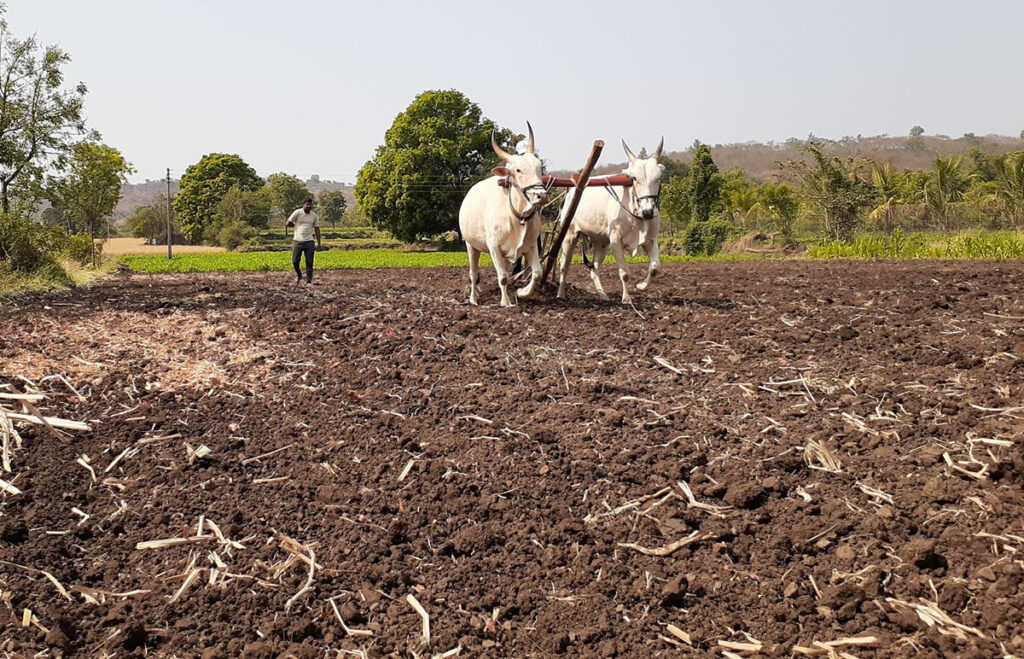
Why Soil Health is India’s Biggest Agricultural Crisis. When people talk about challenges in Indian agriculture, the conversation often focuses on crop yields, market prices, rainfall patterns, or farmer incomes.
While these are all important concerns, there is a deeper issue quietly affecting them all – soil health. Beneath every successful harvest lies a living ecosystem of microorganisms, organic matter, nutrients, water, and plant roots working together. When this system functions well, farms become productive, resilient, and profitable. When it begins to break down, the effects are felt across the entire agricultural landscape. Today, declining soil health is emerging as one of the most significant challenges facing Indian agriculture. Nearly 29% of eroded soil is permanently lost to the sea, while 61% is simply transferred from one place to the other and the remaining 10%is deposited in reservoirs.
Understanding Soil Health
Soil is often viewed simply as a medium in which crops grow. In reality, healthy soil is a living system. Good soil contains organic matter, beneficial microorganisms, earthworms, nutrients, air, and water. Together, these elements help crops access nutrients, retain moisture, resist stress, and grow efficiently. Healthy soil performs several critical functions:
When soil health declines, all of these functions begin to weaken.
How Did We Reach This Point?
Over the past several decades, Indian agriculture has achieved remarkable increases in food production. However, this growth has often come at a cost. Many farming systems have become increasingly dependent on:
While these practices may provide short-term results, they can gradually reduce soil organic carbon, weaken soil structure, and diminish biological activity. As soil loses its natural fertility, farmers often find themselves applying increasing amounts of external inputs simply to maintain existing levels of production. This creates a cycle that becomes difficult and expensive to sustain.
Why This Matters for Small and Marginal Farmers
The impact of declining soil health is particularly severe for small and marginal farmers. Unlike large agricultural operations, small farmers often have limited financial buffers. Rising input costs, crop failures, or unpredictable weather can quickly affect household income and livelihood security. When soil health deteriorates, farmers commonly experience:
Reduced water retention
Greater dependence on irrigation
Higher fertilizer requirements
Increased pest and disease pressure
Lower resilience during droughts or heavy rainfall
Rising cultivation costs
For many farming families, these challenges accumulate season after season. What begins as a soil problem eventually becomes an economic problem.
What We Are Seeing on the Ground
Through our work with farmers across Maharashtra, AGRO RANGERS has observed recurring patterns on many farms. Soils that once held moisture for longer periods now dry out quickly. Farmers often report increasing fertilizer use without corresponding improvements in crop performance. In some cases, fields become compacted, making it harder for roots to penetrate and access nutrients. At the same time, weather patterns are becoming less predictable. Farms with poor soil health struggle to cope with both droughts and intense rainfall events. When healthy soil is absent, even a good monsoon may not translate into stable farm productivity. This is why rebuilding soil health is becoming increasingly important for long-term agricultural resilience.
Soil Health and Climate Resilience
Climate change is already affecting farming systems across India. Healthy soils can contribute to climate resilience by improving water infiltration, water-holding capacity, soil aggregation and root-zone conditions, thereby helping crops better cope with periods of water stress and intense rainfall. Irregular rainfall, rising temperatures, prolonged dry spells, and extreme weather events are becoming more common. Healthy soil acts as a natural buffer against many of these challenges. Soils rich in organic matter can absorb and retain more water, reducing the impact of droughts. Better soil structure improves water infiltration during heavy rainfall, helping reduce runoff and erosion. In many ways, soil health is one of the most practical forms of climate adaptation available to farmers. Improving soil health not only benefits crops today but also helps farms remain productive under changing environmental conditions.
Can Soil Be Restored?
The encouraging reality is that many forms of soil degradation can be reduced, managed and, in some cases, partially reversed through appropriate, site-specific soil-management practices. Across many farms, regenerative practices are helping rebuild soil structure, biological activity, and fertility over time. Some of these practices include:
While results may not appear overnight, consistent implementation can gradually restore the natural processes that make soil productive and resilient.
How Should Soil Health Be Measured?
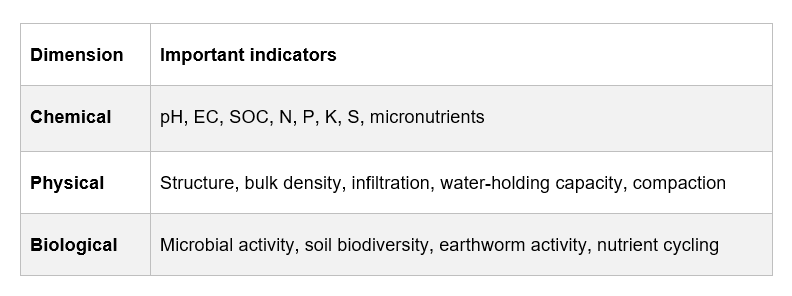
Soil health cannot be assessed from crop appearance alone. It should be evaluated using a combination of chemical, physical and biological indicators. In India, the Soil Health Card framework assesses 12 parameters: nitrogen (N), phosphorus (P), potassium (K), sulphur (S), zinc (Zn), iron (Fe), copper (Cu), manganese (Mn), boron (B), pH, electrical conductivity (EC) and soil organic carbon (SOC).
Looking Ahead
India’s agricultural future depends not only on what grows above the ground but also on what happens beneath it. Healthy soil supports healthy crops, stable farmer incomes, better water management, and stronger resilience to climate uncertainty. For small and marginal farmers, soil health is not simply an environmental concern. It is directly connected to livelihood security, economic stability, and long-term sustainability. At AGRO RANGERS, we believe that restoring soil health is one of the most important investments that can be made in the future of Indian agriculture. Because when soil health improves, it creates a stronger foundation for productive, resilient and sustainable agricultural systems.
